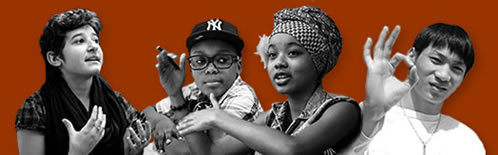

Based in Providence, R.I., What Kids Can Do (WKCD) is a national nonprofit founded in 2001 by an educator and a journalist with more than 60 years combined experience supporting adolescent learning in and out of school. Using digital, print, and broadcast media, WKCD presses before the broadest audience possible a dual message: the power of what young people can accomplish when given the opportunities and supports they need and what they can contribute when we take their voices and ideas seriously. The youth who concern WKCD most are those marginalized by poverty, race, and language, ages 12 to 22.
While other organizations share WKCD’s message and commitments, our strategies and style are unique. We view young people as active collaborators in every phase of our work. We bring local stories, voices, and resources to international attention and vice versa. We speak to influential adults and young people alike. We document the good work of others as well as sponsoring our own projects.
Some know WKCD, most of all, as a website (WKCD.org). Others know us as researcher-documenters, as grant makers and program generators, and as a book publisher. We are all four.
Our nonprofit imprint, Next Generation Press, has published over 15 books (with over 175,00 copies in print)—all with youth collaborators. Working with mainstream publishers, WKCD writer Kathleen Cushman has created the widely acclaimed “Fires” series: Fires in the Bathroom: Advice for Teachers from High School Students (New Press, 2005), Fires in the Middle School Bathroom: Advice for Teachers from Middle Schoolers, with Laura Rodgers (New Press, 2009), and Fires in the Mind: What Kids Can Tell Us About Motivation and Mastery (Jossey-Bass, 2012). The Motivation Equation: Designing Lessons that Set Kids' Minds on Fire (2013) is our first multimedia e-book.
WKCD’s international work includes photo documentary and photo essay projects with youth on four continents.
Meet WKCD staff and consultants
Since WKCD.org began in 2001, the site has grown by leaps and bounds. It now contains over 350 feature stories, 12 special collections, 7 additional websites devoted to special WKCD initiatives, hundreds of video clips and audio slideshows featuring student voices, and much more.
Here’s a guide.
Feature stories These stories showcase “powerful learning with public purpose” by our nation’s adolescents; they privilege youth voices and work, in and outside school. We produce and post these stories regularly. Once a story moves off our “front page” we place it in an archive, where it is arranged chronologically, by theme. You can access the archives through the FEATURES STORIES menu tab, or search an article with key words in the search box (top right).
Special collections On certain topics we organize materials in special collections. (For example: college access and success, service learning, students as allies in school reform, global youth voices, students as action researchers.) The collections typically include WKCD-produced stories, tools, multimedia, examples of student work, publications, and links to related WKCD websites. Some of these collections are now part of our archives; others continue to be updated.
Short publications Since its start, WKCD has produced short publications that support youth voice, student engagement in school reform, and academic success. Each of these publications originally appeared in print. Here we provide PDFs for free download and duplication with attribution to WKCD.
Other WKCD Websites Since 2006 we have created several additional websites that stand separately from WKCD.org but link to this one. Each site is extensive in its own right, filled with articles, research, downloads, tools, multimedia, and student work. How Youth Learn and its sub-site, Learning by Heart: The Power of Social-Emotional Learning in Secondary Schools are the newest. First in the Family and In Our Village are the oldest. (The latter includes a virtual library of more than 40 photo-essay books produced by youth around the globe.)
In every aspect of its work, What Kids Can Do relies on strategic partnerships with:
These partnerships provide the ideas, stories, student work, tools, and support that animate What Kids Can Do. At the same time, WKCD adds visibility to the efforts of these allies, many of whom have worked for years to expand prevailing notions of what constitutes powerful learning and achievement for young people.
The following contributors have provided invaluable funds, inspiration, and connections:
Adobe Systems
AT&T Foundation
Bill & Melinda Gates Foundation
Bronx New Century High Schools
Carnegie Corporation
Forum for Youth Investment
Jobs for the Future
Lyndhurst Foundation
Lumina Foundation for Excellence
McCormick Tribune Foundation
MetLife Foundation
MTV
Nellie Mae Education Foundation
NoVo Foundation
Rural School and Community Trust
Shinnyo-en Foundation
Surdna Foundation
The New Press
The Northeast and Islands Regional Education Lab at Brown
William and Flora Hewlett Foundation
W.K. Kellogg Foundation
News of WKCD and the work of the youth and educators we support have generated over 250 articles in local and national newspapers, from The New York Times to the Sacramento Bee. We have appeared with our youth collaborators on radio stations across the country. We have published articles about our work in close to two dozen professional journals and magazines. Our Next Generation Press books have sparked reviews in newspapers like the Los Angeles Times, education publications like Teacher's College Press, and trade journals like News Photographer.
WKCD has also provided background material and stories for a wide range of print and broadcast media, including PBS, Jane Pauley Show, Today Show, Lehrer Report, Utne Reader, Salon.com, U.S. News and World Report, People's Magazine, Education Week, and The Chronicle of Philanthropy-along with fielding regular calls from education reporters.

have a story for wkcd?
Want to bring public attention
to your work? WKCD invites
submissions from youth and
educators worldwide.
“There’s a radical—and wonderful—new idea here… that all children could and should be inventors of their own theories, critics of other people’s ideas, analyzers of evidence, and makers of their own personal marks on the world.”
– Deborah Meier, educator