WKCD has produced a number of short publications that support youth voice and activism, student engagement in school reform, and academic success for students marginalized by class, race, and language.
Each of the publications below originally appeared in print. Here, we make them available as PDFs. They require Adobe Reader. You are welcome to duplicate them.
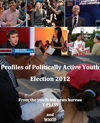 |
Profiles of Politically Active Youth |
| If a surge in youth participation was the storyline for the 2008 presidential election, youth disengagement shaped the 2012 narrative. "Kingmakers No More: Is Gen Y Too Jaded to Vote? " an article in Forbes Magazine asked. Nonetheless, young journalists at Indianapolis' Y-Press scoured the country for politically active youth for whom disillusion was not an option and politics was a passion. Young Democrats and Republicans. Occupy protesters and Tea Party ralliers. Youth delegates to the RNC and DNC. Youth who insist on "No Labels." This short publication captures their stories. The fact that young journalists, ages 12 - 17, led this project, from top to bottom, is a story in itself. (October 2012) | |
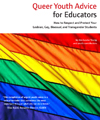 |
Queer Youth Advice for Educators: How to Respect and Protect Your Gay, Bisexual, and Transgender Students |
| This unique publication brings the voices of queer youth to the educator's table. Commissioned by WKCD, author Abe Louise Young spent six months traveling the country and talking to LGBT youth about what they need in the classroom. The youth make clear that it's not being LGBT that causes the problems. The problems are the outcome of intolerant actions and speech by peers, parents, teachers, clergy, and strangers. Bullying is a symptom of the culture. By educating ourselves and being allies to queer youth, we can help keep those 110 in every thousand students alive and thriving. The other 890 will benefit in wonderful ways from an inclusive, nonviolent school climate. (September 2011) | |
 |
|
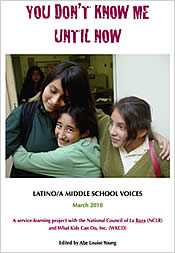
| This 32-page publication presents a selection of poems, essays, and photographs from students at three Latino charter schools: Camino Nuevo Charter Academy in Los Angeles, East Austin College Prep Academy in Austin, and Lighthouse Community Charter School in Oakland. All three are part of the National Council of La Raza school network. From start to finish, students talked about their key concerns, from safe families in caring communities and respect and equity for their ethnic groups to a passionate desire to make a difference.The PDF also includes a guide to supporting students’ diverse identities through creative writing, produced by WKCD Writing Facilitator Abe Louise Young. (May 2010) | |
 |
|
| For years, a goup of teens in Detroit—the nation’s most segregated metropolitan area—have been coming together to confront the stereotypes that color their lives. In 2008, WKCD joined forces with “Youth Dialogues on Race and Ethnicity” to produce a small book of reflective writing by thirteen of the program’s teen participants. Both the program’s adult organizers and its young allies put a premium on speaking up and out. “Silence is political,” says University of Michigan professor and program director, Barry Checkoway. “When young people—who are conditioned to be silent—speak for themselves, it transforms them and also the communities of which they are part.” | |
 |
Making Writing Essential to Teens Lives |
| Literacy is a key factor in determining whether students fail or succeed academically, and our nation's teachers are painfully aware of the crisis point that students now occupy. When students are alienated from academic subject matter, how might we draw them in to writing as a space to grow and shine, and to communicate? This 73-page PDF of our website feature on teen writing includes interviews with inspiring teachers, tips, and a diverse collection of student writing projects from across the country—all with a public audience in mind. (April 2006) | |
 |
A Guide to Creating Teen-Adult Conversations in Your Community |
| After the publication of our book What We Can't Tell You: Teenagers Talk to the Adults in Their Lives (Next Generation Press, May 2005), WKCD traveled the country co-hosting with MetLife Foundation and local organizations, public forums that promoted honest conversations between teenagers and adults. We were continuously struck by the absence of public occasions where adults and young people can find common ground. For those who would like to join us in creating public conversations between teens and adults on issues that matter to both, we have created a free 40-page guide filled with sample panel discussions, interactive exercises, handouts, tips, resources, and readings. (October 2005) | |
 |
Students as Allies in Improving Their Schools |
| What if teachers and students became steady allies rather than frequent adversaries in their daily classroom encounters? With support from MetLife Foundation, What Kids Can Do has explored this question for several years in an initiative called "Students as Allies." In Chicago, Houston, Oakland, Philadelphia, and St. Louis, WKCD has collaborated with teams of students and teachers organized by a local non-profit intermediary. The efforts in each city include several parts: helping students conduct survey research about their own schools, then supporting dialogue and constructive action around the research results, while nurturing youth leadership all along the way. (December 2004) | |
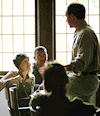 |
First Ask, Then Listen: How to Get Your Students to Help You Teach Them Better |
| This short manual describes the process and questions behind WKCD's book Fires in the Bathroom. It offers prompts and exercises for teachers wanting to start a dialogue with theirown students. (September 2003)
|
|
 |
The Schools We Need: Creating Small High Schools That Work For Us |
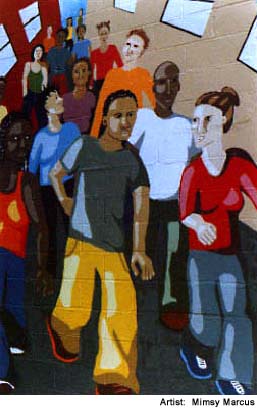
| What’s so different about a small high school, compared to a large one? When school leaders decide to create more small schools in their district, how do students experience the change in their everyday routines, as well as in their sense of power and possibility? In this publication—a joint effort of WKCD, the Bronx New Century High Schools, and the Carnegie Corporation—two dozen students in Bronx, NY talk about their experiences planning and attending small schools and breaking down large high schools. (May 2003) | |
 |
Taking Democracy In Hand: Youth Action For Educational Change in the San Francisco Bay Area |
| More than field notes but less than a case study, this informal paper draws upon site interviews and conversations with ten Bay Area youth organizing groups, highlighting some of their burgeoning accomplishments and growing wisdom. It also sketches how their work builds, step by step, capital and capacity among participants; why youth-adult partnerships are important; where dots are being connected (between issues, between strategies, across races) and where they need connection (between youth and adult school reformers). Hoping to spur further discussion and analysis, the paper ends with a series of hard questions relevant to youth activists and adult partners everywhere—with much of the work in the Bay Area pointing to promising answers. (May 2002) | |
 |
Learning Outside the Lines: Six Innovative Programs That Reach Youth |
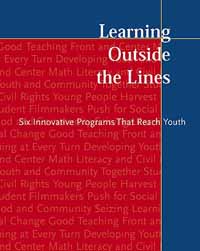
| This report, prepared in conjunction with the WK Kellogg Foundation, details distinctive learning environments, in and outside school, that garner from young people deep engagement and high achievement. Featured are the Llano Grande Center in Edcouch-Elsa, TX; the Educational Video Center in New York City; Best Practice High School in Chicago; the Algebra Project in Jackson, MS; The Food Project in Boston; and The Met in Providence, RI. (March 2002) | |
 |
Walking the Talk: Community Colleges Where Everyone Wins |
| The Metlife Foundation Community College Excellence Award recognizes the crucial role that community colleges play in helping underserved youth and adults meet their educational and career goals. Jobs for the Future, which has managed the MetLife award since its inception in 2001, asked its colleagues at Next Generation Press/WKCD to gather the voices of staff and students at the 2004 award-winning colleges to disseminate their experiences more widely. Walking the Talk presents the compelling stories of administrators, faculty, and staff working together to help students succeed—and of the students they motivate, challenge, and support. (April 2005) | |
 |
A Future That Works: First-Person Accounts of Community Colleges That Change Lives |
| This booklet brings to life the profound impact of community colleges on students who must juggle school, work, and family. With personal stories from the winners of the 2002 MetLife Foundation Community College Excellence Awards, A FUTURE THAT WORKS puts a human face on the struggles and accomplishments of students confronting barriers of poverty, language, or limited expectations of their potential. (April 2003) |