 |
Social and Emotional Learning
What would it take to weave social and emotional learning (SEL) into the daily fabric of our nation’s high schools? In 2013 and 2014, with support from the NoVo Foundation, WKCD studied effective practices in five American high schools that, by their own design, put social-emotional learning at their core. We created multimedia to capture student voices in these schools and we assembled selected SEL resources for educators. In an Education Week commentary, we summarized the implications for public high school education. We gathered our findings and stories in Belonging and Becoming: The Power of Social and Emotional Learning in High School (Harvard Education Press, 2015).
More recently, WKCD published a monthly feature called Short Workouts for Social-Emotional Learning, geared towards middle and high school students. May 2016 | April 2016 | March 2016 | February 2016 | January 2016 | December 2016 |
 |
Student-Centered Learning
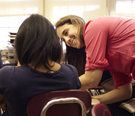
What does teaching look like when it truly centers on the student’s learning needs? As one of nine research teams for Students at the Center, an initiative by Jobs for the Future and the Nellie Mae Foundation for Education, WKCD's Barbara Cervone
and Kathleen Cushman spent a year interviewing and observing teachers, students, and administrators
in six diverse middle and high schools, experienced in student-centered learning. Despite their differences, the schools all shared a common foundation
of practice. Student-centered
learning—where adolescents exercise both choice and
responsibility—demands a new approach to teaching, which
involves facilitating and coaching more than direct instruction.
Student-centered teachers develop a fresh relationship to their
craft, playing multiple roles and always learning
new skills. |
 |
Students as Allies in School Reform
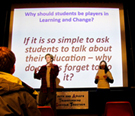
The refrains are familiar. School is boring, students complain. It's hard to see a connection between what we're taught and the real world. Students are unprepared, teachers say. Too much of teaching is really just classroom management. What would it take for students to become stakeholders not just in their own success but also in that of their teachers and schools? In 2003-2004, with support from MetLife Foundation, WKCD launched its "Students as Allies in School Reform" initiative. In five cities, we helped students and teachers conduct survey research about their own schools and supported dialogue and constructive action around their research results. Our surveys have been downloaded more than 200,000 times from WKCD.org—by teachers, education students in college and graduate school, and student groups.
|
 |
Student Research for Action
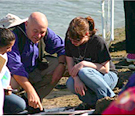
From 2003–2006, WKCD had the opportunity to help students and teachers nationwide to conduct ambitious student “action research” projects targeting critical education and community issues. The Bill & Melinda Gates Foundation provided the financial support. The initiative exemplified two of WKCD's core beliefs: that what happens inside a school's walls should connect to the world outside and that young people have the capacity to reflect, analyze, and create new knowledge that can then improve their schools and communities.
Over the course of three years, WKCD awarded 49 grants, in amounts ranging from $500 to $4,750, to a total of 52 individual schools in 17 states. The products of the students' research—several books, videos, reports, new programs, surveys, powerpoints—still attract attention, more than a decade later. |
 |
Student/Youth Voice
When WKCD embraced student voice as part of our guiding principles in 2001, the idea that youth should be welcomed as crucial investors in improving their schools and communities had few advocates. The research on the power of student engagement was commensurately sparse.
In contrast, WKCD set out to celebrate and support youth as collaborators in our books and other publications (e.g., our “Fires” series); in survey projects nationwide; in more than 75 grants to student research groups across the globe; and in the feature stories we produced for this website. We learned that meaningful student voice must:
be inclusive, be woven into the daily fabric of school, target substantive issues,
involve asking and listening by all parties, and
lead to constructive action. |
 |
Voices from the Middle Grades
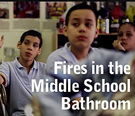
What do students in the middle grades most need from their teachers? WKCD offered their answers in a sequel to our groundbreaking book Fires in the Bathroom—this time, listening to the voices of early adolescents. Talking in depth with 40 students in middle grades around the country, WKCD’s Kathleen Cushman asked them questions like:
What helps you want to try hard in school—or keeps you from doing so?
How can your teachers help you deal with social issues and pressures you face?
When it comes to your parents, what do teachers need to know and do?
How can teachers prepare you for the transition to high school?
To interpret their answers, Cushman teamed with Laura Rogers, a developmental psychologist at Tufts University who worked in middle schools for 13 years. |